How Much Does a Website Cost in 2026? A Pricing Guide for Startups and Small Businesses
How much does a website cost in 2026? Real price ranges in USD for landing pages, business sites, stores and web apps, plus hidden fees and how to budget.
 Eric Boluwatife
6 October 2026 · 7 min read · Updated 31 October 2026
Why nowThe question on almost every first call, answered once, properly, with real 2026 numbers.
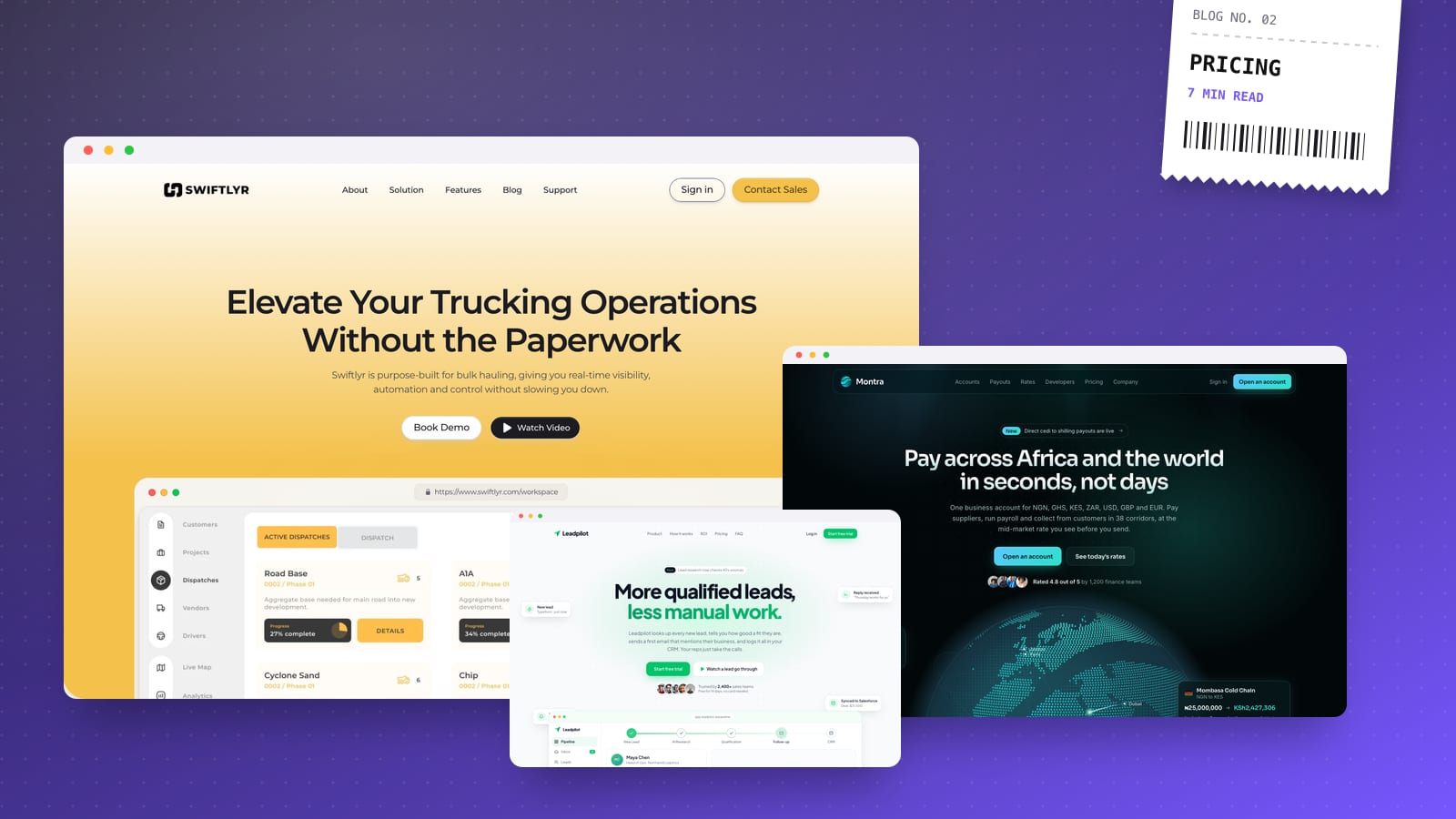
A professionally designed and built website in 2026 typically costs anywhere from about $1,000 for a simple no-code site to $2,500–$10,000+ for a custom multipage website, with web apps and large ecommerce stores going higher. The price depends far less on "number of pages" than on how much strategy, custom design, content and functionality the project needs.
I design and build websites for founders and small businesses, so I spend a lot of time answering this question on discovery calls. This guide breaks down what actually drives website design cost, the typical price tiers, the costs people forget, and how to get a quote you can trust.
What actually drives website design cost
When I quote a project, I'm estimating time and risk. These are the factors that move the number most:
- Scope and page types. Ten pages that share one template cost less than five pages that each need a unique layout. I count page types, not just pages.
- Custom design vs template. A bespoke design in Figma, built around your brand and audience, takes more time than adapting a theme. It also tends to perform better because it's shaped around your actual goals.
- Content and copy. If your copy, photos and product data are ready, the project moves quickly. If someone has to write, source or restructure content, that's real work and it shows up in the price.
- Functionality. Booking, memberships, multi-language, search, calculators, integrations with a CRM or payment provider: each adds build and testing time.
- CMS needs. A site where you can add blog posts, projects and team members yourself needs a properly modelled CMS. That's worth paying for, because it saves you developer fees later.
- Motion and interaction. Subtle animation is cheap. Scroll-driven storytelling, 3D or interactive tools are not.
- Platform. Framer and Webflow builds are usually faster to ship. Custom code (Astro, Next.js, React) costs more upfront but gives you full control and no platform lock-in.
- Timeline. Rushed deadlines mean rearranging other work, so they usually cost more.
Typical website price tiers in 2026
Here's how I'd frame the market in general terms. Prices vary by region and by who you hire, so treat these as ranges, not rules.
DIY website builders
Doing it yourself on a template builder costs mostly your time plus a monthly subscription. It's a reasonable choice for a side project or a very early test. The trade-off is that you are the designer, copywriter and developer, and it usually shows.
Freelancer or small studio: no-code and landing pages
A focused landing page or a small site on Framer or Webflow, built by an experienced freelancer, typically sits in the low thousands of dollars. This is where most early-stage startups should start.
Custom multipage websites
A fully custom company website with a CMS, on-page SEO and a proper content structure usually lands in the mid thousands, rising with page types, content work and integrations.
Ecommerce and web apps
Online stores and web apps involve product data, payments, accounts and logic, so they start higher and vary the most. A store with a few dozen products is a very different job from one with thousands of SKUs and custom fulfilment rules.
Agencies
Larger agencies bring project managers, strategists and bigger teams. That's valuable for complex organisations, but the overhead means prices are often several times what a senior freelancer would charge for similar output.
My starting prices as a reference point
To make this concrete, these are my published starting prices and typical timelines. Every project is quoted on scope, so these are where pricing begins, not fixed packages.
| Service | Starting price | Typical timeline |
|---|---|---|
| Branding & identity | From $800 | 2–4 weeks |
| AI & automation | From $1,000 | 1–4 weeks |
| Landing pages | From $1,200 | 1–2 weeks |
| No-code builds (Framer, Webflow, WordPress) | From $1,500 | 1–3 weeks |
| Multipage websites | From $2,500 | 3–6 weeks |
| Ecommerce | From $3,000 | 3–8 weeks |
| Web apps | From $3,500 | 4–10 weeks |
A typical multipage website includes a sitemap and content strategy, custom design across all pages, a CMS for your projects, blog and team, on-page SEO, a responsive build with QA, and a training video so your team can run it. If you only need one page to launch a product or run ads, a landing page is the faster, cheaper starting point.
Hidden website costs most budgets forget
The design and build fee is the biggest line, but it isn't the only one. When I put together a proposal I flag these so nobody is surprised later:
- Domain name. A modest yearly fee for most extensions; premium names cost more.
- Hosting. Static sites on modern hosts can be very cheap or free at small scale. Framer and Webflow charge a monthly site plan. Ecommerce platforms charge a monthly subscription plus transaction fees.
- CMS and platform plans. Some CMS tiers limit the number of items or editors, and upgrading costs extra.
- Copywriting. Good copy is one of the biggest factors in whether a site converts. If you can't write it yourself, budget for a copywriter or for help structuring your messaging.
- Photography and video. Stock imagery works in a pinch, but real photos of your team, products or space build far more trust.
- Branding. If you don't have a logo, colour palette and type system yet, your site will be harder to design well. See my brand identity checklist for what you actually need.
- Third-party tools. Email marketing, booking software, analytics, chat widgets and form tools often have their own subscriptions.
- Maintenance and updates. Plugins, dependencies and content all need attention over time. Budget something monthly or quarterly, even if it's small.
Budgeting if your business earns in another currency
If your revenue is in a currency other than US dollars, the budgeting conversation is a little different. Many of my enquiries come from founders in Nigeria, so I use the naira as the example below, but the same points apply anywhere:
Paying in USD vs NGN
Many international tools (Framer, Webflow, Shopify, hosting providers, domain registrars) bill in dollars. If your business earns in naira, those recurring costs move with the exchange rate. Before you commit to a platform, check how much of your ongoing spend is dollar-denominated and whether your card can pay those bills reliably.
Planning around FX
Exchange-rate swings can change a budget quickly. A sensible approach is to agree a fixed project price upfront, pay in clear milestones, and keep a small buffer for subscriptions that renew in dollars. Avoid open-ended hourly arrangements when your currency is volatile.
What to prioritise when budget is tight
If you can't do everything at once, I usually recommend this order:
- A clear message and one strong page that explains what you do and how to contact or buy from you.
- Fast, mobile-first performance. Many visitors will be on mobile data, so a light site matters.
- WhatsApp and phone contact that's easy to tap, because that's how many customers prefer to reach businesses.
- A CMS you can update yourself, so you're not paying a developer for every small change.
- Extra pages, animation and integrations once the core is working.
Starting with a focused landing page and growing into a full site is a perfectly good strategy.
How to get an accurate website quote
Vague briefs get vague quotes. To get a number you can rely on, bring:
- Your goal. More leads, more sales, credibility for investors, hiring? One primary goal shapes everything.
- A rough sitemap. List the pages you think you need, even if it changes.
- Examples you like, and what specifically you like about them.
- Your content status. Do you have copy, photos, a logo?
- Must-have features, such as booking, payments, member areas or integrations.
- Your deadline and budget range. Sharing a range isn't a weakness; it lets a good designer tell you what's realistic.
My process is simple: a 30-minute call, then a fixed-price proposal within a day. If you go ahead, we move through strategy and sitemap, design in Figma with two rounds of edits, then the build with CMS and analytics, and finally launch with a walkthrough video and 30 days of free support. Fixed pricing means you know the total before any work starts.
If you're replacing an existing site, read how to redesign a website without losing SEO before you sign anything.
Already have a site and wondering whether it needs fixes or a rebuild? The free website check scores it out of 100 and shows the fixes worth the most points, which is a good way to decide where your budget should go. You can also see what each budget level looks like in practice by browsing my work by industry.
If you'd like a real number rather than a range, book a 30-minute call. Tell me what you're building and I'll send a fixed-price quote within a day, so you can plan your budget with confidence.