Hiring a Web Designer in Lagos: A Founder's Checklist for 2026
Hiring a web designer in Lagos? A founder's checklist covering portfolios, questions to ask, red flags, pricing, timelines, contracts and who owns your website.
 Eric Boluwatife
17 September 2026 · 6 min read
Why nowFor founders comparing quotes in Lagos, after a run of discovery calls that kept raising the same questions.
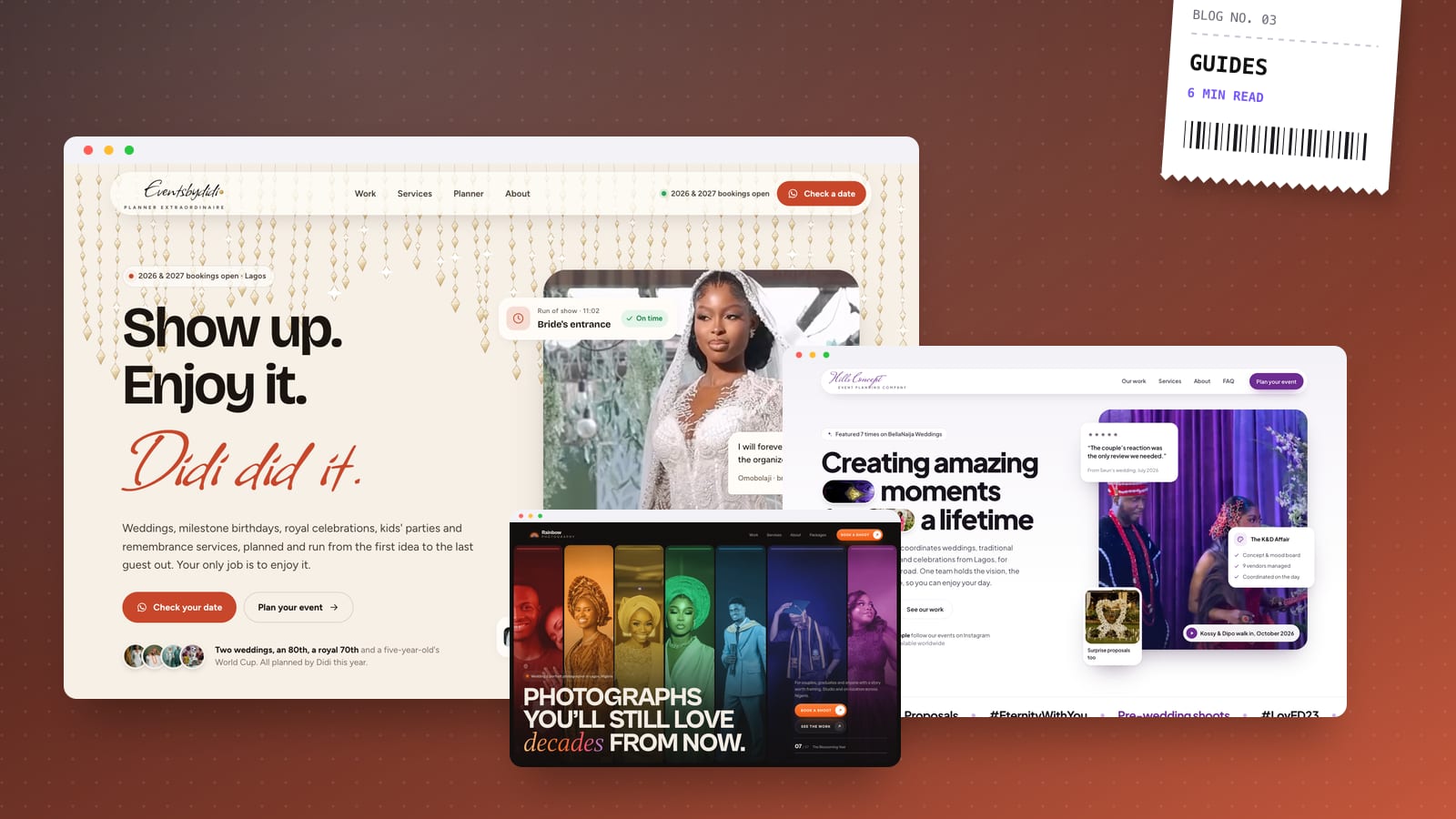
To hire a good web designer in Lagos, look for a portfolio of live sites (not just mockups), a clear written process, a fixed-price proposal tied to milestones, and an explicit agreement that you own your domain, hosting and accounts. Ask how they handle content, SEO, mobile performance and support after launch. If any of that is vague, keep looking.
I'm a web designer and developer based in Lagos, working with founders here and abroad. I've seen how quickly a project goes wrong when scope and ownership aren't clear from day one. This checklist is what I'd want every founder to run through before paying a deposit to anyone, including me.
Step 1: Get clear on what you actually need
Before you contact a single designer, write down:
- Your main goal. Leads, sales, bookings, credibility with investors or partners?
- The type of project. A single landing page, a multipage company website, an online store, or a web app with logins and data?
- Your content situation. Do you have a logo, copy and photos, or will those need to be created?
- Your budget range and deadline. Even a rough range helps a designer recommend the right approach.
This one page of notes will save you hours of back-and-forth and make quotes far easier to compare.
Step 2: Evaluate the portfolio properly
Every web designer in Lagos has a portfolio. What you're looking for is evidence they can deliver your kind of project.
- Live links, not just screenshots. Open the sites on your phone. Are they fast? Does the layout hold up? Do the forms work?
- Range and relevance. Have they built something similar in complexity to what you need?
- Design and build. Some people only design; others only develop. If one person is doing both, check that the finished sites match the polish of the mockups.
- Distinct work. If every project looks like the same template in different colours, expect the same for yours.
- Process write-ups. Case studies that explain the problem and decisions show how someone thinks, not just how things look.
Step 3: Questions to ask a web designer before hiring
Use these on your first call. Good designers answer them comfortably.
- What platform would you build this on, and why? A thoughtful answer weighs your team, budget and plans, rather than defaulting to one tool for everything.
- What exactly is included in the price? Pages, rounds of revisions, CMS setup, SEO basics, analytics, training.
- How many revision rounds do I get, and at what stage? Two rounds at the design stage is common and sensible.
- Who writes the copy and sources images? If it's you, when do they need it?
- How will I update the site myself? Ask to see the CMS or editor.
- What happens after launch? Is there a support window? What do changes cost afterwards?
- Whose accounts will the domain, hosting and tools be on? The answer should be yours.
- How do you handle SEO and performance? At minimum: page titles, meta descriptions, a sitemap, clean headings, compressed images and mobile testing.
- What do you need from me, and when? Delays usually come from missing content and slow feedback, so understand your side of the timeline.
Red flags when hiring a web developer in Lagos
These are the warning signs worth taking seriously:
- No written scope or proposal, just a figure sent over WhatsApp.
- Full payment upfront with no milestones.
- The domain or hosting registered in the designer's name, or "I'll keep the login for you".
- No answer on revisions, or unlimited revisions promised at a suspiciously low price.
- Pirated themes or plugins, which can cause security problems and break on updates.
- No mention of mobile, even though most of your visitors will likely be on phones.
- Pressure to decide immediately or prices that change mid-conversation.
- Disappearing after launch, with no plan for fixes or handover.
One of these isn't always a dealbreaker. Several together usually are.
How web design pricing and timelines work
Pricing varies widely across Lagos and Nigeria, from very cheap template installs to agency retainers. A few general principles help you compare quotes fairly:
- Fixed price beats open-ended hourly for most website projects. You know the total before work starts.
- Compare scope, not just numbers. A cheaper quote that excludes copy structure, CMS setup and SEO isn't actually cheaper.
- Expect milestones. A typical structure is a deposit to start, a payment after design approval, and the balance at launch.
- Timelines depend on content. A landing page can take one to two weeks; a multipage site three to six; ecommerce and web apps longer. Waiting on your content or feedback extends every one of these.
For a full breakdown of cost drivers and hidden costs, see how much does a website cost in 2026.
Paying in naira or dollars
Some designers price in naira, others in dollars, especially those who also work with international clients. Whichever it is, agree the currency and the exact amount in the proposal so exchange-rate movements don't cause disputes halfway through.
Remote vs local: does your designer need to be in Lagos?
Not necessarily. Most of my projects run entirely online, with calls, shared Figma files and recorded walkthroughs. What matters is communication, overlap in working hours, and a clear process.
A local designer is helpful when:
- You want in-person workshops or photoshoots at your location.
- They understand local customer behaviour, such as how often people prefer to contact businesses on WhatsApp, pay by bank transfer, or browse on mobile data.
- You need local payment integrations like Paystack or Flutterwave and someone who has set them up before.
A remote designer is fine if they're responsive, organised and transparent. Either way, insist on the same standards of scope, ownership and support.
Ownership: domain, hosting and accounts
This is the most important part of this checklist and the one founders skip most often.
- Register your domain in your own name and email. If a designer does it for you, make sure the account is transferred to you.
- Create hosting, platform and CMS accounts under your business, then invite the designer as a collaborator.
- Own your analytics, Google Search Console and any ad accounts.
- Get access to the code repository if the site is custom-built.
- Keep a password manager or secure document with every login, and remove access for collaborators when the project ends.
If the relationship ever ends, you should be able to hand everything to someone else without asking permission.
Contracts and milestones
You don't need a 20-page contract, but you do need something in writing. A simple agreement should cover:
- Scope: pages, features, platform and what's excluded.
- Deliverables: design files, the live site, CMS access, training.
- Timeline with your responsibilities (content, feedback windows).
- Payment schedule tied to milestones.
- Revisions: how many and at which stages.
- Ownership: that you own the final design and code once paid.
- Support: what's included after launch and for how long.
I send every client a fixed-price proposal within a day of our first call, then work through strategy and sitemap, design in Figma with two rounds of edits, build with CMS and analytics, and launch with a walkthrough video and 30 days of free support. Whoever you hire, look for that kind of clarity.
If you're comparing options, book a 30-minute call. I'll walk through your project, answer every question on this list, and send a fixed-price quote within a day.